
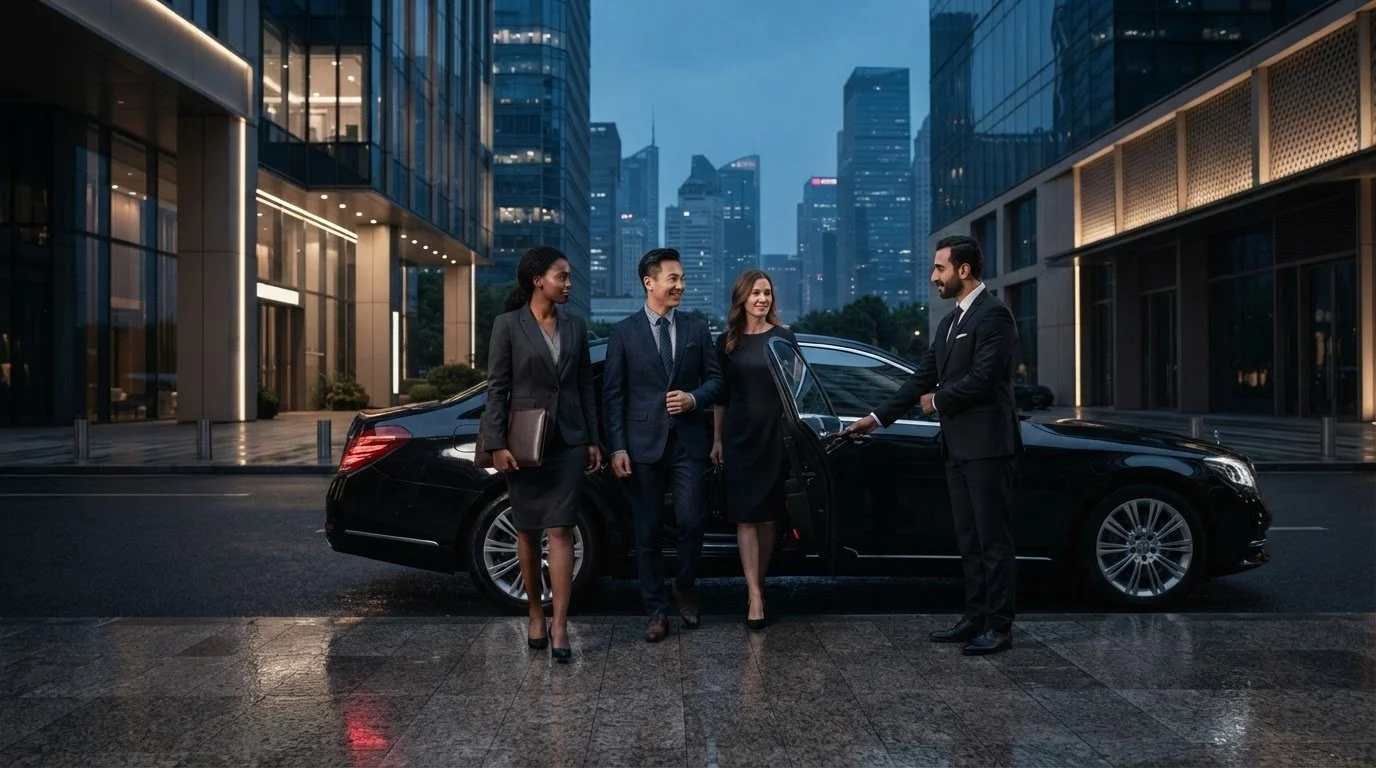
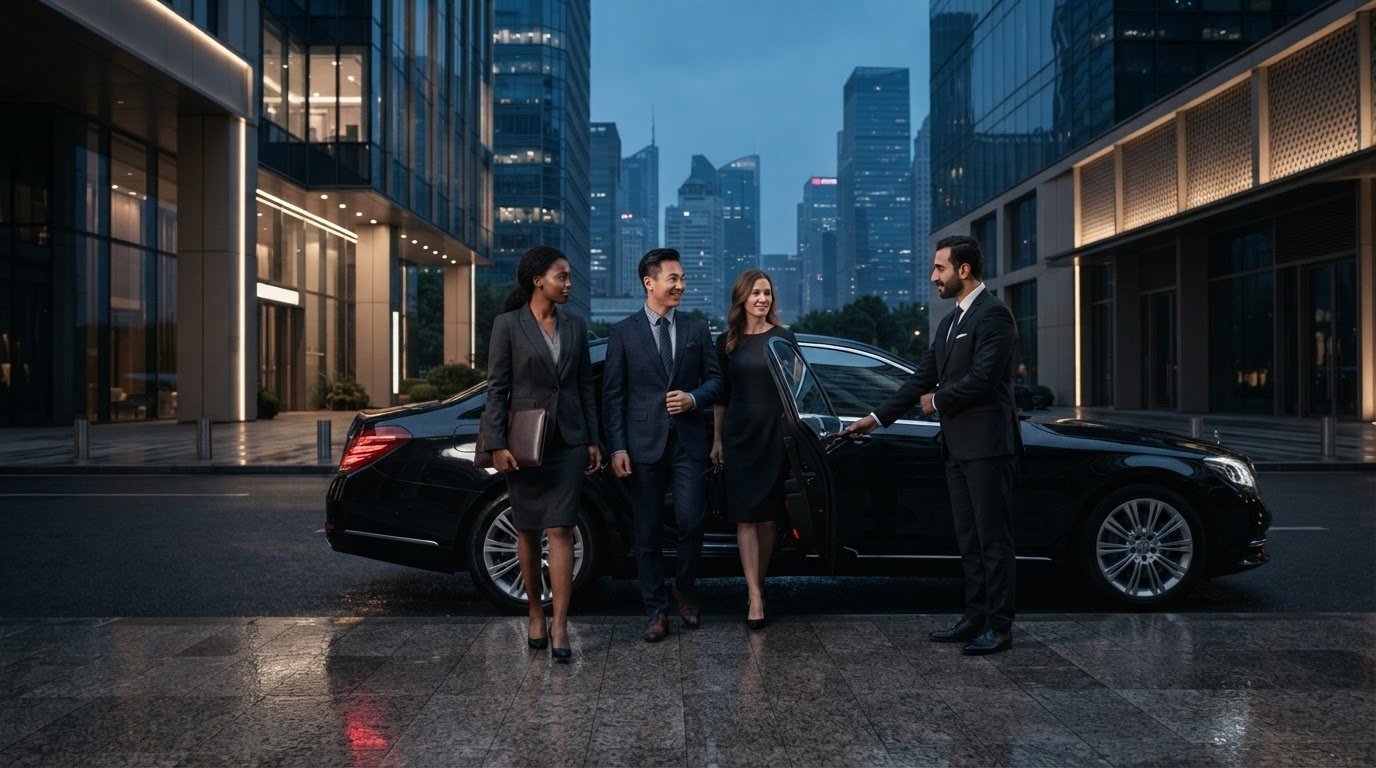
Impressing clients with professional transportation starts with punctual, courteous service and a well-maintained, comfortable vehicle. A limousine makes the arrival feel deliberate, while a professional chauffeur helps keep the journey smooth and composed. Together, these details can set a polished tone before the meeting begins.
First impressions matter, and the way a guest travels can shape their experience of your hospitality. Make the journey feel considered by planning pickup times, choosing a suitable vehicle, and arranging transportation that lets the client focus on the day. A private chauffeur can add privacy and polish to a client visit without making the experience feel showy.
Key Takeaways
- Plan pickups around the client’s schedule, and share clear timing, locations, and passenger details to help the day run smoothly.
- For corporate events, send the transportation schedule in advance and reconfirm key arrangements the day before.
- Choose a well-maintained vehicle suited to the occasion, with comfort and a composed arrival in mind.
- Use a professional chauffeur to make the journey more orderly and give clients space to prepare, work, or travel in privacy.
- Match the transportation option to the itinerary: point-to-point travel suits direct trips, while hourly service can support a schedule with multiple stops.
1. Providing punctual transportation for prospective clients
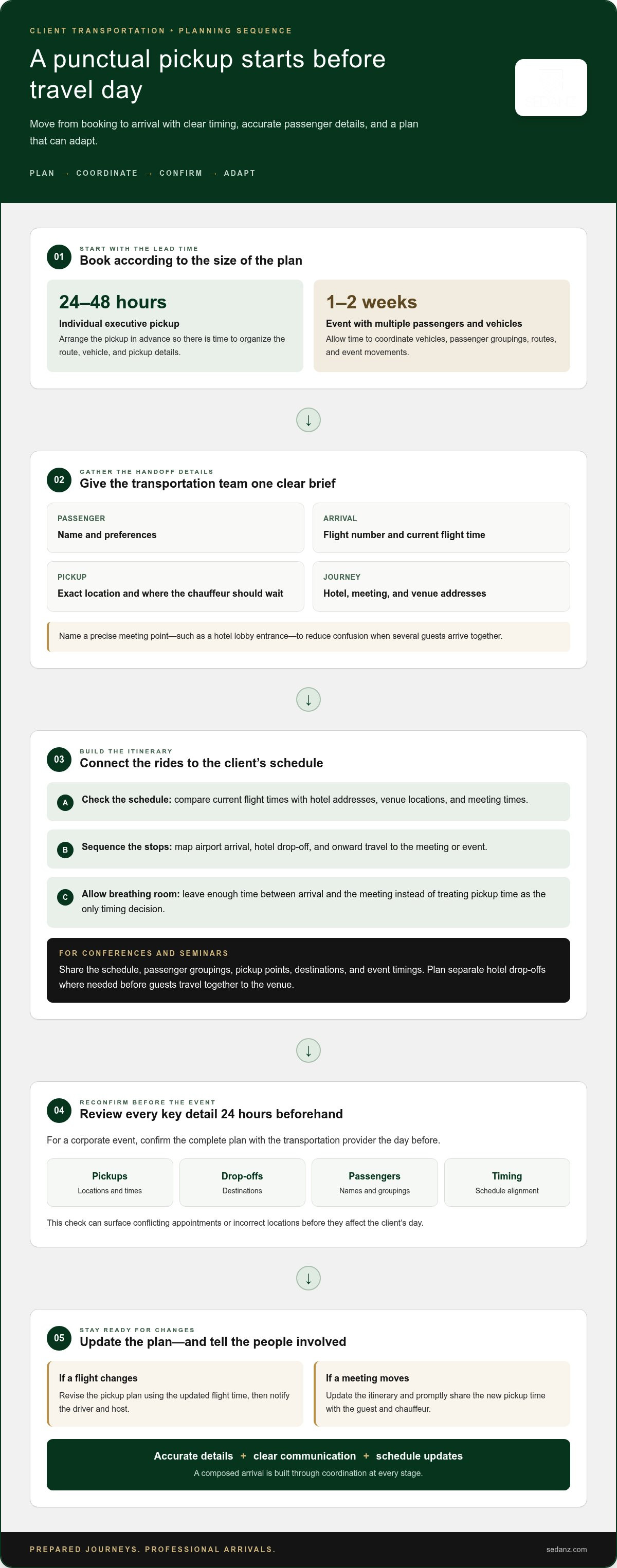
Book individual executive pickups 24 to 48 hours in advance. For events involving multiple passengers and vehicles, arrange transportation one to two weeks ahead. These lead times give planners room to organize routes, vehicles, and pickup details before the client’s schedule begins. A practical way of impressing clients with professional transportation is to make the pickup plan clear before travel day.
Respect a client’s time by planning the pickup around the agreed schedule. Share the passenger’s name, flight number, preferences, and exact pickup location with the transportation team. For an airport arrival, these details help coordinate the handoff. Naming a precise spot, such as a hotel lobby entrance, also reduces confusion when several guests arrive together.
Good etiquette means providing accurate timing and passenger details, communicating changes promptly, and telling the chauffeur where to wait. For a corporate event, confirm every pickup, drop-off, passenger name, and timing with the transportation provider 24 hours beforehand. This review gives the host an opportunity to spot conflicting appointments or incorrect locations before they affect the client’s day.
Compare the schedule with current flight times, hotel addresses, and venue locations. If a meeting moves or a flight changes, update the transportation plan and notify the people involved. For example, send a revised hotel pickup time to both the guest and the chauffeur. Clear coordination can reduce stress and help create an organized welcome.
Professional chauffeurs support punctuality with courteous service, route knowledge, and attention to the itinerary. A chauffeur who knows the destination can account for traffic and choose a practical route. Leave enough time between arrival and the meeting, too, rather than treating pickup time as the only timing decision. Preparation helps the visit feel composed.
Conference and seminar transfers need a shared plan. Provide the schedule, passenger groupings, pickup points, destinations, and event timings. For example, airport arrivals may need separate hotel drop-offs before guests travel together to a conference venue. Impressing clients with professional transportation means coordinating these movements around the event agenda, not treating each ride as a separate task.
Choose a chauffeured service with a clear pickup plan and a schedule that suits the client’s day. A late arrival can disrupt a meeting and create a poor impression. Confirm the designated pickup location and make the itinerary easy to follow. Consistent preparation, clear communication, and respect for the guest’s time are central to impressing clients with professional transportation.
Book an individual executive pickup 24 to 48 hours in advance; plan event transportation involving multiple passengers and vehicles one to two weeks ahead. For corporate events, share the schedule early and reconfirm key details 24 hours beforehand.
2. Corporate transportation and first impressions
A visiting client begins forming an impression before the meeting starts. A study cited in the research places the average first-impression window at 27 seconds, making the arrival experience one part of the broader welcome. A clear pickup plan, professional drivers, and a suitable ground transportation arrangement help make that welcome feel organized. In Connecticut, the same principle applies whether a guest is traveling to an office, hotel, or corporate event.
Personalized outreach helps explain corporate transportation in terms relevant to each prospect. Before contacting a company, review its public business profile and identify a likely need, such as airport pickups for visiting executives or travel between meeting venues. Then write a concise message that names the travel challenge and explains how planned ground transportation can support the itinerary. A specific example is more useful than a generic service claim.
Printed flyers can also introduce corporate transportation to local businesses. Distribute them to corporations and decision-makers such as human resources managers, with clear details about the travel needs addressed. For example, a flyer might describe airport-to-hotel transfers for visiting teams or coordinated transportation for a company event. Keep the message professional and easy to scan, so a busy reader can quickly understand the service’s relevance.
Connecticut companies can plan around the journey, not just the destination. A client arriving at an airport may need transportation to a hotel, then onward travel to a meeting or event. Map the stops in sequence, assign pickup times, and provide the chauffeur with addresses and passenger details. This helps the transportation plan fit the business schedule, whether one executive or a group is traveling.
How can companies coordinate airport pickups and track flight delays for visiting clients? Share the passenger’s name and flight number with the transportation provider, then designate one person to monitor schedule changes and communicate updates. Keep the hotel address, meeting location, and pickup instructions in one itinerary. If the flight changes, update the pickup plan and promptly notify the driver and host.
What corporate transportation expenses are tax-deductible in the United States? Ground transportation connected to documented business travel is the category to review, while personal travel should be separated from business costs. Keep receipts and record the business purpose, route, and passengers. These details help determine how an expense should be treated under applicable tax rules.
For a Connecticut prospect, a concise outreach note, a prepared airport itinerary, and clear pickup instructions all show that the company values the guest’s time. Transportation becomes part of meeting preparation, not a last-minute detail.
3. Vehicle age, safety technology, and in-car amenities
A vehicle’s condition matters more than its model year alone. Even a newer car can feel poorly prepared if the interior is untidy, while a well-maintained vehicle can present well over time. For a business journey, consider visible upkeep, comfort, and whether the vehicle suits the passengers and itinerary. These details communicate care before the meeting begins.
Match the vehicle to the trip. A sedan suits an executive traveling alone between a hotel and an office. An SUV can accommodate several passengers or extra luggage. For a corporate group traveling together, a larger passenger vehicle can simplify coordination and keep colleagues on one itinerary. The right choice supports the journey without making the arrival feel overstated.
Comfort affects how clients use travel time. Spacious seating can make a longer ride feel more settled, while a quiet cabin gives passengers room to read, prepare notes, or talk discreetly. Sedanz first-class vehicles include complimentary Wi-Fi and other amenities, though what matters most depends on the trip. A guest heading straight to a meeting may value a calm space to prepare.
Cleanliness and routine maintenance deserve equal attention. Look for a tidy passenger area, clear windows, and orderly seating before the client boards. Transportation businesses are advised to select services that regularly maintain and inspect their fleets. Such upkeep supports a more composed ride and helps prevent avoidable interruptions during business travel.
Assess chauffeured transportation through practical criteria: drivers should be licensed and insured, and vehicles should receive regular maintenance and inspection. These checks help evaluate the people and vehicles involved, rather than relying on luxury styling alone.
Technology can contribute to a comfortable journey, but it cannot replace basic preparation. A clean vehicle, functioning seat belts, and a chauffeur focused on the road matter more than an impressive feature list. For a client who needs to work, a quiet ride and suitable seating may be more valuable than entertainment. Choose amenities around the passenger’s purpose, not assumptions about what every guest prefers.
Before arranging business travel, consider the route, passenger count, luggage, and meeting schedule together. A solo airport-to-office trip calls for different space than a group transfer with presentation materials. Selecting a well-maintained vehicle that fits those needs helps the journey feel considered, comfortable, and professionally prepared.
4. Highlighting chauffeur service benefits and corporate-specific features
A professional chauffeur shapes the client’s experience through practical details: a courteous greeting, composed driving, and attention to the agreed itinerary. For an executive arriving before a presentation, that calm transition can set a professional tone. Chauffeured transportation should support the occasion without making the welcome feel showy or distracting.
Personal touches work best when they reflect known preferences. A welcome sign can help a guest identify the pickup, while preferred beverages or relevant reading materials can make the ride feel considered. Music and route choices can also be tailored to the passenger. These details are most useful when they serve the client’s needs, rather than adding extras without purpose.
Choose a vehicle to suit the group and itinerary. A luxury sedan suits an individual executive or small meeting party. An SUV offers another option for business travel, while a Mercedes Sprinter van can bring colleagues together for a shared corporate transfer. Mini buses and motor coaches can accommodate larger event groups. The right format depends on the group’s travel plan.
A chauffeur familiar with the area can offer useful context, such as practical recommendations near a meeting venue. Clients may also appreciate a private setting to work or discuss business discreetly. A courteous, knowledgeable chauffeur helps preserve that atmosphere by keeping the journey attentive and unobtrusive.
Corporate transportation should match expectations without unnecessary extras. Before arranging the trip, define its purpose, passenger needs, route, stops, and timing. A direct transfer between an office and a hotel calls for a different plan than an event itinerary with several locations. Clarity helps tailor the service to the business relationship and the day’s priorities.
Pricing depends on the case and is given after a quote request; relevant factors include the vehicle, trip duration, route, and number of stops. A tailored arrangement should reflect the transportation actually needed, rather than charging for unrelated additions. For example, a single point-to-point journey differs from an hourly itinerary that includes several meetings.
Luxury vehicles and professional chauffeurs work together to create a polished experience. The vehicle provides the setting; the chauffeur’s conduct shapes how the client feels throughout the journey. When both reflect courtesy and careful preparation, the service can support lasting business relationships while keeping the focus on the meeting or event itself.
5. How does a chauffeured black car service compare with rideshare, taxis, and rental cars for client meetings?
A chauffeured black car service centers the trip on a planned business itinerary. A professional chauffeur handles the drive, leaving the passenger free to review a meeting brief, make calls, or answer emails. That can suit an executive traveling between an airport, hotel, and office. The value lies in arranging transportation around the business schedule, not simply finding a ride when needed.
On-demand rides and taxis can provide point-to-point travel, but they may feel less tailored to a client visit. A guest might need to arrange each trip separately, explain the destination, or coordinate a pickup during a busy event. A prearranged chauffeur can instead follow a planned route and pickup schedule. That distinction matters when the host wants the arrival and onward travel to feel coordinated.
A rental car gives the visitor control over departure times and routes, but also puts driving, navigation, parking, and vehicle arrangements on the client. For someone unfamiliar with the city, those tasks can compete with meeting preparation. A chauffeured journey leaves the driving to a professional, allowing the passenger to work or travel without navigating an unfamiliar area.
Privacy is another practical consideration. A client may use the ride to review presentation notes or make a confidential business call. A private vehicle with a professional chauffeur can provide a suitable setting for that purpose, without requiring the passenger to manage directions behind the wheel. Still, do not assume every passenger wants to work; a quiet ride may be preferable.
There are also operational considerations. Using a professional transportation company can reduce liability compared with using rideshares or taxis, though it does not remove every business risk. A company should consider who is traveling, how often transportation is needed, whether multiple stops are planned, and how the trip fits its internal policies. For a single direct journey, point-to-point service may suit the schedule. An executive with several appointments may need a different arrangement.
Choose by itinerary, not prestige alone. A visiting client traveling directly from a hotel to one meeting may need a straightforward transfer. A guest with several appointments may benefit from a dedicated chauffeur and planned schedule. A chauffeured black car is useful when time, privacy, and a composed client experience matter more than driving independently.
Sedanz: Airport Transfers
Sedanz provides Airport Transfers for businesses welcoming clients who need a planned journey from the airport to a hotel, meeting, or event. Point-to-Point Transfers suit travel between scheduled destinations, while Hourly Charters can accommodate itineraries with several stops. Luxury Sedan Service is a refined option for an executive traveling alone or with a small party.
Choose the service around the client’s itinerary: identify the pickup location, destination, and planned stops, then select the arrangement that fits the day. This makes transportation part of a considered client experience, rather than a last-minute detail. For airport arrivals, share the flight and passenger information needed to coordinate the pickup.
For chauffeured transportation tailored to a business visit, contact Sedanz to discuss the itinerary.
Make the next client visit feel considered
The next client journey is an opportunity to make hospitality part of the working relationship. Decide what would help your guest arrive ready: a direct trip between appointments, an airport pickup, or a chauffeur available across a changing schedule. Impressing clients with professional transportation means making the journey support the conversation, not compete with it.
Sedanz offers Airport Transfers, Point-to-Point Transfers, and Hourly Charters for different business itineraries. Choose the arrangement that fits the day’s destinations and pace, then plan around your guest’s needs. A thoughtful journey gives a client more room to focus on what brought you together.
Contact Sedanz to plan your ride and shape a composed arrival for your next client visit. The right details can help the welcome feel natural, professional, and easy to remember.
Frequently Asked Questions
What professional transportation options make the best impression on clients?
Choose a chauffeured vehicle that fits the guest, itinerary, and occasion. A sedan suits an executive traveling alone, while an SUV can accommodate extra passengers or luggage. For colleagues traveling together, a Mercedes Sprinter van keeps the group in one vehicle. Airport Transfers suit visiting guests, and Hourly Charters can work for schedules with several appointments. A well-matched arrangement feels purposeful and helps the guest focus on the business visit.
How much does executive car service or corporate transportation cost in the United States?
The price depends on the trip and is provided after a quote request. Relevant factors include vehicle type, route, journey duration, passenger requirements, and planned stops. For example, a direct transfer between an airport and a hotel differs from transportation arranged across several meetings. Share the full itinerary and passenger details when requesting a quote so the proposed service reflects the actual journey.
What should businesses look for when choosing a corporate transportation provider?
Look for clear booking procedures, professional chauffeurs, insured vehicles, and regular fleet maintenance. Ask how itinerary changes are handled and who will coordinate transportation on the day. For a visiting executive, one point of contact can help keep the host, passenger, and chauffeur aligned. Review pickup locations, destinations, and passenger information before finalizing the trip.
What amenities and vehicle features help create a professional client experience?
Choose features that support the passenger’s purpose, such as a calm cabin for work or practical navigation for a changing itinerary. Sedanz first-class vehicles include GPS navigation with traffic monitoring, iPads, flight tracking, artesian water, and complimentary Wi-Fi. For a guest arriving before a presentation, these amenities can help them prepare or stay connected. Match the vehicle and features to the client’s needs.
What are the risks of late or unreliable transportation, and how can businesses prevent them?
Late transportation can cause a client to miss part of a meeting, disrupt the schedule, or begin a visit under pressure. Reduce these risks by assigning one person to oversee the itinerary, sharing updates with the passenger and host, and keeping pickup instructions accessible. Build flexibility between appointments and identify an alternate route or meeting contact in case traffic or a schedule change affects the journey.