


Executive transport reliability is measured before the journey begins, not only by arriving on time. That’s why reliability matters in executive transport: it shapes how trips are planned, how schedules hold up, and how safely and calmly passengers can respond when conditions change.
Time and clear expectations matter when a meeting, airport connection, or event anchors the day. A dependable plan can reduce uncertainty around traffic, weather, and route changes, leaving passengers free to focus on the purpose of their journey.
This article explains how reliability supports trip planning, passenger safety, predictable journey times, and responses to disruption. It also explores practical ways to assess transport performance, so you can understand what dependable service means beyond a punctual arrival.
Key Takeaways
- Build trip plans around the journey’s purpose, while accounting for traffic, weather, and possible route changes.
- Consider how an experienced driver and a well-planned journey can support passenger safety, especially in unfamiliar settings.
- Look beyond punctuality: predictable travel times help protect schedules and make transitions between appointments smoother.
- Prepare for disruption with clear communication and contingency plans that can adapt as conditions change.
- Assess transport performance through consistent measures, and interpret small differences carefully when the underlying sample is limited.
Building confidence during trip planning
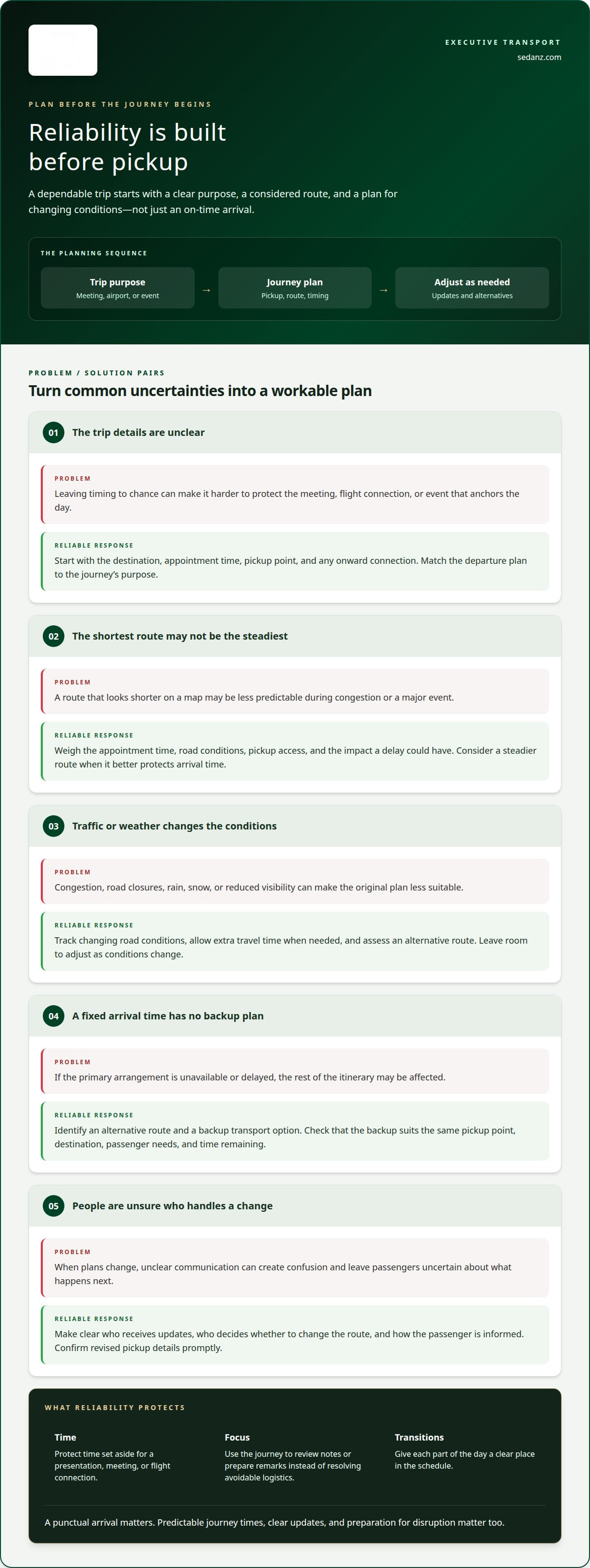
Reliable executive transport makes a journey a planned part of the day. Start with the destination, appointment time, pickup point, and any onward connection. A meeting downtown, for example, may call for a different departure plan than an airport transfer. Clear details help match the route to the purpose of the trip instead of leaving timing to chance.
Understanding why reliability matters in executive transport means looking beyond a single pickup. Arriving on time can protect the time set aside for a presentation, meeting, or flight connection. It also lets passengers use the journey productively, perhaps reviewing notes or preparing remarks instead of sorting out avoidable logistics. A well-planned schedule gives each transition a clear place in the day.
How can an executive transport company support on-time pickups and monitor traffic? It can plan around the requested pickup time and route, track changing road conditions, and communicate adjustments. A practical plan accounts for the pickup location, destination, likely congestion, and a suitable alternative route. If traffic slows the main route, the chauffeur can assess another option using local knowledge, an approach taken by dedicated chauffeur operations like Executive Travel Cars UK to keep itineraries on schedule.
Route planning is not just about choosing the shortest distance. A good plan weighs the appointment time, road conditions, pickup access, and the effect a delay could have. A route through a busy business district may look shorter on a map but be less predictable during a major event. A steadier route may do more to protect the arrival time.
Planning for traffic and weather makes that decision more realistic. Before departure, consider congestion, road closures, rain, snow, or reduced visibility. If a storm is forecast along the route, allowing extra travel time or choosing a less exposed road may help protect the schedule. Conditions can change, so leave room to adjust the plan.
Contingency planning matters when a journey has a fixed arrival time. Identify an alternative route and a backup transport option in case the primary arrangement is unavailable. The decision should account for the pickup point, destination, passenger needs, and time remaining. A backup is useful only if it serves the same purpose as the original journey.
Preparation also clarifies who communicates when plans change. A simple response process identifies who receives updates, who decides whether to change the route, and how the passenger is informed. A delay near an airport, for example, may call for a revised route and a prompt pickup update. Clear responsibilities reduce confusion and help keep the rest of the itinerary on track.
Effects on safety and security
Safety depends on more than careful driving. A dependable journey also involves a suitable vehicle, attentive planning, and clear expectations for the passenger. For a late meeting in an unfamiliar district, these details can make the trip feel more controlled.
Fleet Safety and Maintenance
Fleet safety and maintenance mean keeping vehicles in sound working condition and addressing issues before a journey. This matters because a vehicle problem can interrupt travel and create avoidable stress for passengers with fixed plans.
Practical maintenance covers tires, brakes, lights, and other essential vehicle systems. A clear process also helps identify concerns before a vehicle is dispatched. If a warning light appears before a scheduled pickup, for example, the vehicle should be assessed rather than sent out without addressing the issue.
Vehicle suitability matters, too. A sedan may suit one person heading to a meeting, while a larger group may need a different vehicle. Matching the vehicle to the passengers and their luggage helps avoid cramped seating or blocked visibility. These considerations support an orderly journey without suggesting any vehicle can eliminate road risks.
Passenger Safety and Comfort
Passenger safety and comfort depend on attentive driving and a journey suited to the passenger’s needs. A composed ride can help someone arrive ready for a meeting instead of distracted by discomfort or uncertainty.
Professional chauffeurs who prioritize passenger safety are especially valuable in unfamiliar places or during late-night travel. Local road conditions, complex pickup points, and changing traffic require attention. Passengers also benefit when the chauffeur stays focused on the route and avoids unnecessary distractions.
Comfort is practical, not merely decorative. A passenger carrying work materials to a corporate appointment, for example, benefits from well-organized seating that makes it easier to settle in and keep belongings accessible. Clear pickup instructions also reduce confusion, particularly at busy venues where several entrances may look alike.
Communication contributes to security. Passengers should know the agreed pickup point and destination, and any change should be communicated clearly. If an event entrance is closed, for example, confirming the new meeting point can prevent someone from waiting alone in the wrong place. Predictable handoffs matter as much as the drive itself.
For journeys where a dedicated vehicle and professional driver suit the occasion, point-to-point transportation can provide a straightforward connection between locations. The right arrangement supports calm travel, while attentive planning keeps safety and comfort in view.
When several people travel together, reliable group transportation helps keep everyone together and schedules aligned. Punctual pickups can protect important moments and shared plans. Door-to-door service with a professional chauffeur also means passengers do not need to manage traffic, parking, or carpooling, easing coordination for the group.
A quiet, comfortable commute can help business travelers review notes, respond to emails, or prepare for presentations. Unreliable transportation can disrupt communities and organizations, affecting social and economic activity as well as safety and health. Dependable service supports individual journeys and helps groups stay together and keep shared plans on track.
Travel time reliability and predictable journeys
Reliable travel means arrival times stay predictable, even as road conditions change. That predictability matters because each journey connects to commitments beyond the vehicle.
Executive car services are typically arranged in advance with a professional chauffeur. Unlike on-demand trips, a pre-arranged service is planned around the passenger’s schedule. With company-owned vehicles, the business must manage its own drivers, vehicles, and scheduling.
In the United States, reliable executive transport costs depend on the service type, distance, duration, vehicle, and schedule. These factors shape the quote, which follows a request.
Travel time reliability is affected by congestion, incidents, road closures, weather, and pickup access. Technology can help identify changing conditions, while clear communication and useful travel data support timely decisions. An incident alert, for example, may prompt a route change before the passenger reaches a delayed section.
Impacts on Businesses and Travelers
Travel time reliability means consistency in journey duration. It matters because businesses and passengers plan around arrival times. A traveler heading to a client meeting can use a predictable journey to coordinate arrival and preparation. Consistent travel times also make it easier to manage connections between appointments, work, and other commitments.
Door-to-door service can reduce travel stress by avoiding the need to coordinate separate legs, parking, or a vehicle change. Someone traveling from an office to a conference venue, for instance, can stay focused on the event instead of managing each transition. The value lies in the complete trip, not just the time on the road.
Risks to Meetings and Transfers
Unreliable transport creates timing risks when a meeting, airport transfer, or corporate event has a fixed start. A late arrival can cut into preparation time or disrupt the next appointment. For an airport transfer, delays may complicate the connection with a flight; at an event, late arrivals can throw shared schedules off track.
The cost of reliable executive transportation depends on factors such as distance, duration, vehicle choice, and service type. Each affects what the journey requires, so no single figure applies to every trip.
Travel-time planning can use a buffer index to express how much extra time a trip needs for dependable arrival. A U.S. transportation reliability primer describes a 50% buffer index for a trip averaging 20 minutes: travelers allow an additional 10 minutes to arrive on time in 95% of cases. The example shows why average duration alone may not capture the time a schedule needs.
For business travel, predictable timing supports a smoother journey from pickup to arrival. A consistent plan helps passengers and organizers set clearer expectations, even when road conditions change.
Anticipating delays and disruptions
A dependable transport plan accounts for disruption before it affects the itinerary. Weather, road incidents, labor strikes, and geopolitical events can change routes or availability, so a clear response process matters as much as the original schedule.
Start with the journey’s fixed points: pickup location, destination, appointment time, and any airport connection. Then identify disruptions that could affect each leg. A road closure may require a different route, while severe weather may slow several roads at once. Each situation calls for a practical response, not just a tighter arrival estimate.
Contingency planning can define a primary route, an alternative, and another transport option if the first arrangement becomes unavailable. For a meeting across town, the alternative route should still reach the correct entrance. For an airport journey, account for the terminal and drop-off point, not just the airport name.
A response protocol makes changes easier to manage. Establish who makes the decision, who communicates with the passenger, and how an updated pickup or arrival plan is shared. If an incident blocks the planned road, for example, the decision-maker can assess another route and send a concise update with the revised meeting point.
Good disruption planning separates what can change from what cannot. A pickup time may shift, while a meeting start or flight departure remains fixed. That distinction helps prioritize decisions: protect the airport connection first, for example, then revise a flexible stop later in the itinerary.
- Route disruption: assess an alternative road and confirm it serves the same destination.
- Weather changes: review conditions before departure and allow the plan to adapt.
- Unavailable transport: use a prepared alternative arrangement where one is available.
Communication should be prompt and specific. “There’s a delay” offers little direction; “the route is blocked, and pickup is moving to the west entrance” explains what changed and what to do next. Regular contact between transport coordinators and carriers can help resolve issues before they escalate.
Plans need regular review, too. After a disruption, record what happened, which decisions helped, and where communication slowed. A recurring closure near a conference venue, for instance, may call for a revised approach route at the next event. Updating contingencies as operations and risks change keeps plans practical rather than leaving outdated instructions on file.
For passengers, a good response turns a changing situation into clear next steps. It cannot eliminate every delay, but clear decisions, alternative arrangements, and timely updates can help protect the rest of the journey.
Transport reliability metrics
Transport reliability means delivering a consistent journey, from scheduled pickup through arrival and communication. For executive travel, punctuality matters, but dependable performance also includes how disruptions are handled.
Businesses should review on-time pickup and arrival records, service consistency, communication during delays, and relevant business references. Compare similar journeys: airport transfers and event transportation face different timing pressures.
A useful metric needs context. A punctuality percentage without a clear time window, route type, or sample size can mislead. A record covering routine weekday trips, for example, may not reflect performance during major events or on international journeys.
Look for a pattern, not a single impressive result. Where records allow, separate early arrivals, on-time arrivals, late pickups, and missed bookings. Then consider the impact: a short delay before a flexible appointment differs from one that affects an airport connection.
Treat small differences between providers with caution when a reliability-rating sample is limited. A few trips can make results look unusually strong or weak. Consider the number and type of journeys represented, the period measured, and whether the data reflects your own travel needs.
Useful comparisons include:
- Punctuality: how consistently pickups and arrivals meet agreed schedules.
- Disruption response: how promptly changes are communicated and managed.
- Service consistency: whether performance holds across routes, times, and journey types.
- Passenger handling: whether the service manages pickup details and changes clearly.
These measures help businesses assess the entire experience, not just whether a vehicle arrived. References from organizations with similar needs can add context to the records, especially for recurring meetings or coordinated event travel.
Service-level agreements and reliability guarantees depend on the written terms for a booking or business arrangement. These terms can define how punctuality is measured, how delays are reported, and what response applies when service falls short. Clear definitions matter: “on time” should specify the pickup or arrival being measured and the agreed schedule.
For an international program, consistency also depends on assessing performance across locations and local operating conditions. Compare the same measures across journeys, and distinguish local delays from communication or coordination issues. This makes the results more useful when planning future travel.
Use the findings to set practical expectations for recurring trips, airport connections, and events. Plan executive transportation around your schedule with journey requirements and performance priorities in view.
Businesses evaluating carrier reliability can also review on-time delivery records, goods handling, performance metrics, and references from other businesses in their industry. These checks broaden the review beyond a punctuality figure: delivery records, goods handling, performance metrics, and industry references are distinct parts of the assessment. Keep these carrier criteria separate from passenger-journey measures such as pickup communication and arrival timing, so the comparison reflects the service being assessed. When reviewing a carrier, consider each of these areas together rather than treating one record or reference as the whole picture. This approach gives businesses several relevant elements to examine when judging a carrier’s reliability, while preserving a clear distinction between goods transport and executive travel.
Sedanz: Special Event Transportation
Sedanz provides Special Event Transportation for business gatherings, corporate functions, and occasions where coordinated arrivals matter. A planned journey helps keep transportation aligned with the event schedule, from pickup to arrival. Airport Transfers, Hourly Charters, and Point-to-Point Transfers also support airport journeys, multi-stop schedules, and direct trips between locations. The right arrangement depends on the itinerary, vehicle needs, and timing priorities. Share the pickup details, destination, and schedule when planning transportation, so the journey can be tailored to the occasion. Contact Sedanz to discuss your executive or event transportation needs.
Make Reliability Part of Your Next Travel Plan
Understanding why reliability matters in executive transport can help you make a better decision before booking your next journey. Treat dependable transportation as part of the itinerary, with the same attention given to meeting times, flight connections, and event schedules. Clear priorities help match the journey to the day, whether timing, a direct route, or coordinated travel between several stops matters most.
Sedanz offers Airport Transfers, Hourly Charters, and Point-to-Point Transfers for different travel plans. Consider which option suits your schedule and destination, then share those details when planning. A clear request gives the journey a well-defined starting point and helps align transportation with the commitments ahead.
Contact Sedanz to plan your trip and take the next step toward a more considered travel experience. With your itinerary clearly in view, planning can begin with confidence.
Frequently Asked Questions
What safety and security standards should executive car services meet?
Look for licensed, insured transportation and professional chauffeurs who are screened and prioritize passenger safety. A service should also have clear processes for vehicle maintenance, pickup identification, and communicating route or chauffeur changes. For example, passengers meeting a car at a busy hotel should know the designated pickup point and how to identify the vehicle. These practical measures support a safer, more orderly journey.