


A confident greeting or familiar-looking vehicle doesn’t prove a ride is legitimate. Knowing how to avoid airport transfer scams starts with matching the booked driver and vehicle to your confirmation and checking the license plate before you get in. If you haven’t booked ahead, use the airport’s authorised pickup point. Confirm the fare or make sure the meter is running before the trip begins.
Arriving tired or in a hurry can make an unplanned offer seem convenient, but a few calm checks help you stay in control. This guide explains how to verify drivers and booking apps, recognise suspicious rides, and respond to fare changes or unexpected charges. You’ll also learn when to seek help from airport staff and how a prearranged transfer can make arrival plans clearer.
Key Takeaways
- Compare the arriving vehicle with your reservation to catch a last-minute vehicle swap before you travel.
- Use booking apps from trusted app stores and be cautious of unfamiliar sites requesting advance payment or personal details.
- At the airport, use designated pickup areas and seek help from staff if you’re unsure who is authorised to offer a ride.
- If a driver changes the agreed fare or you feel unsafe, avoid escalating the situation and seek assistance from airport authorities.
- Watch for warning signs such as unsolicited offers, unexplained detours, or charges added after your fare was arranged.
1. Driver and license plate verification
Airport transfer scams can start when an unauthorised driver claims a hotel or prearranged service sent them. Another tactic is a vehicle bait-and-switch: a different vehicle arrives from the one you reserved, sometimes one of lower quality. Keep your reservation details accessible so you can compare the driver and vehicle with what you booked.
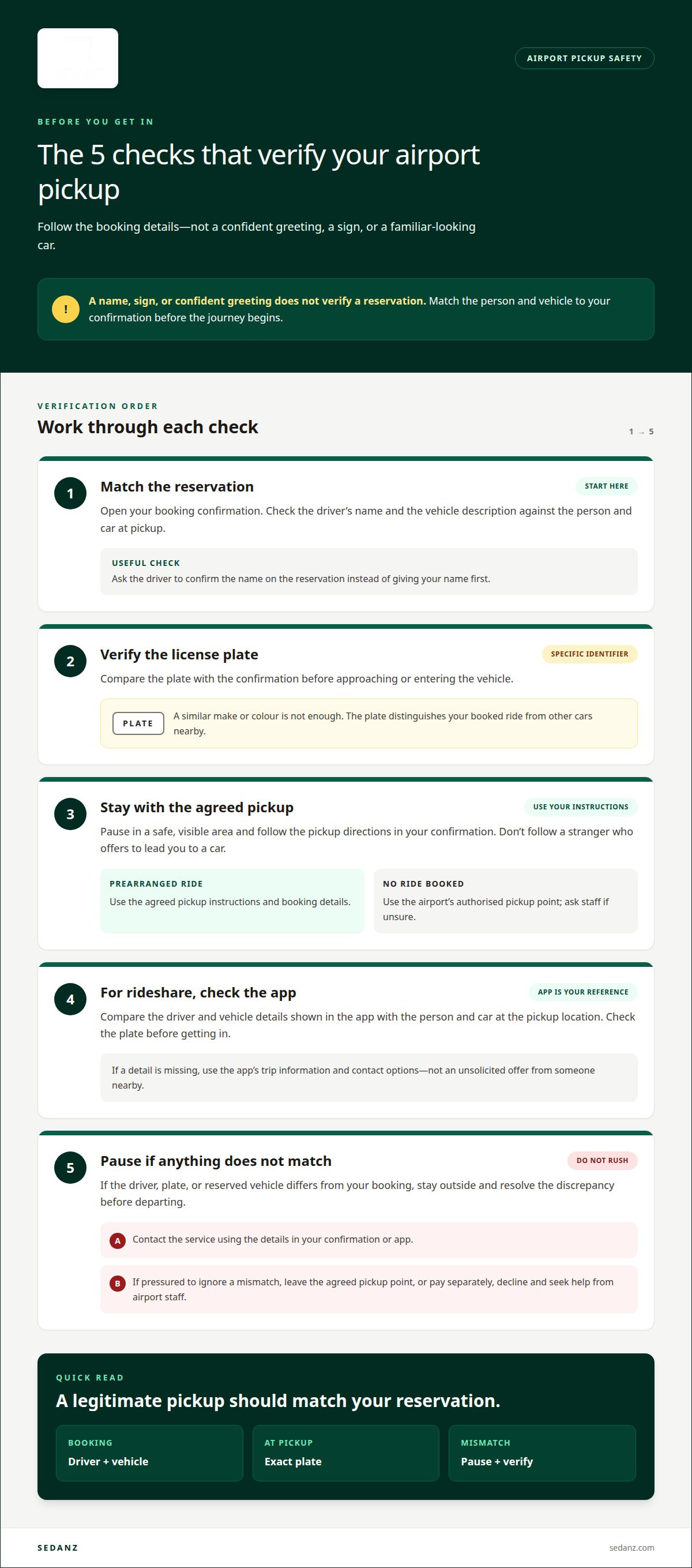
Start with your booking confirmation. Check the driver’s name and vehicle description, then compare them with the person and car at pickup. Confirm the license plate before approaching or entering the vehicle. A similar make or colour isn’t enough. The plate is a specific identifier that helps distinguish your booked ride from other cars nearby.
At a busy terminal, pause in a safe, visible area and follow the agreed pickup instructions. Ask the driver to confirm the name on the reservation rather than giving your name first. Then compare the plate with your confirmation. If someone claims to represent your hotel or transfer service but can’t match the booking details, don’t treat the claim as proof.
For a rideshare pickup, use the booking app as your reference. Compare the driver and vehicle details shown in the app with the person and car at the pickup location, and check the license plate before getting in. If the app doesn’t show a detail you need, use its trip information and contact options instead of accepting an unsolicited offer from someone nearby.
Impersonators may approach passengers inside the terminal, offer to carry bags, or announce that they’re waiting for a passenger. These gestures can feel convenient after a long flight, but a name, sign, or confident greeting doesn’t verify a reservation. Follow the pickup directions in your confirmation, and don’t enter a vehicle if the driver or plate differs from your booking.
A mismatch calls for a pause, not a rushed decision. If the plate or driver’s identity doesn’t match, or the reserved vehicle has been replaced, stay outside and contact the service using the details in your confirmation or app. Ask them to resolve the discrepancy before you depart. Clear vehicle-swap policies explain how a replacement should be handled.
These checks are the practical core of how to avoid airport transfer scams: match the booking, driver, and plate before the journey begins. If someone pressures you to ignore a mismatch, leave the agreed pickup point, or cancel an app ride and pay separately, decline and seek help from airport staff. A legitimate pickup should match the details in your reservation.
2. Phishing websites and ride-booking apps
A convincing booking page can still be fraudulent. Fake transfer websites and apps may request advance payment or personal information, putting you at risk of identity theft or credit card fraud. Before entering details, make sure you’ve reached the service through a trusted route, not an unsolicited message, unfamiliar search ad, or link from a stranger.
For a rideshare, download the app from the Apple App Store or Google Play Store, not through a link in a text or email. Open the app directly to arrange your trip. Check that the pickup location and destination are correct, then review the ride details before confirming. If a driver or stranger asks you to cancel the app booking and pay them directly, refuse.
Pre-booking an airport transfer gives you time to review the arrangements before travel, rather than making a rushed decision in the arrivals area. Use the provider’s official booking channel, enter only the information needed for the journey, and read the confirmation carefully. Keep a record of the agreed service and payment terms so you can compare them with any later request to change the charge.
Be cautious with payment prompts. A page demanding an urgent transfer or asking for sensitive information unrelated to arranging a ride deserves scrutiny. Don’t send card details or identity information in a message, or pay through a separate link supplied by someone claiming to be the driver. If the payment screen differs from the booking process you started, stop and reopen the app or booking page directly.
An app can keep ride details in one place, but it doesn’t make every message genuine. Use its in-app booking and payment steps, and keep communications tied to your reservation. For example, if an email says your airport pickup will be cancelled unless you pay again, don’t follow its link. Open your original booking channel and check the reservation there.
Before submitting a booking, review the provider’s name, journey details, and payment summary on the final screen. Save the confirmation somewhere accessible offline, such as an email or secure travel folder. If you spot an unfamiliar charge or a request that contradicts the confirmation, pause rather than paying twice. Clear records help you arrange a ride and make it harder for a phishing attempt to succeed.
For a planned airport journey, a pre-booked transfer can reduce reliance on last-minute offers and make the arrangements easier to review. Keep the booking, communication, and payment within the same trusted channel from confirmation through pickup. This approach is equally valuable when planning holidays abroad, where booking through comprehensive providers like Steve & Richard Safaris ensures all airport pickups and guided itineraries are coordinated securely before you land.
3. Using authorised airport taxi services
At a United States airport, use the official taxi stand or a posted taxi pickup zone instead of accepting a ride from someone soliciting inside the terminal. Pickup arrangements vary, so follow signs at your destination or ask airport staff where licensed taxis are collected. This keeps your ride within the airport’s designated process.
Taxi queue procedures vary by airport. Follow local signs, join the marked taxi line, and wait for the next vehicle directed to the stand. If the route from baggage claim is unclear, ask an airport employee or visit an official service desk. Don’t follow a stranger offering to lead you to a car.
Before entering a taxi, look for the identifiers used at that airport. Taxis licensed by an airport authority may display its logo, which can help distinguish an authorised vehicle from an unmarked car. A logo doesn’t replace the designated pickup process: use the official stand and check that the vehicle is part of its queue.
Tell the driver your destination, then establish how the fare will be calculated before departure. If the taxi uses a meter, make sure it starts when the trip begins. If you agree on a fixed fare, settle the amount before leaving the curb. This helps avoid confusion if the final charge differs from what you expected.
Someone inside the terminal claiming to be a taxi driver may offer a quick ride or say the official queue is inconvenient. Don’t accept just because the person knows your destination or carries a sign. Walk to the marked taxi stand or ask airport staff for directions. An authorised pickup starts through the airport’s stated process, not an unsolicited pitch.
Take the same care when taxi stands and app-based pickup areas are separate. Follow the signs for the service you booked instead of going to a different zone with someone promising a faster departure. If directions conflict, stop at a staffed information point and ask for the correct pickup location. Don’t enter a vehicle while you’re unsure.
Before a taxi departs, have your destination ready and clarify the fare method. If you’re unsure whether the vehicle or driver is authorised, step back and seek help from airport or airline employees at designated desks. Using an official stand, following posted directions, and confirming the fare arrangement are practical ways to choose a more accountable ride.
4. Responding to an attempted overcharge
Airport transfer fares don’t follow one universal format across major U.S. cities. A taxi may use a meter or a fixed fare, so establish which applies before leaving the pickup point. For a metered trip, confirm the meter is running; for a fixed fare, agree on the amount before departure.
A fair charge should follow the fare method and terms agreed before the ride. Ask what the quoted amount covers and whether extra charges apply, such as a detour or luggage fee. Check the airport’s official transportation information or ask airport staff where local taxi guidance is available. Keep your booking confirmation or written fare details accessible during travel.
If the driver raises the price after the trip begins, calmly refer to the original agreement. Ask what changed and request an explanation before accepting a new amount. Charges for an unnecessary detour, extra luggage, or rush hour can arise after a fare was agreed. Don’t argue while the vehicle is moving; focus first on reaching a safe, public place.
Pay attention to the route and compare it with your destination and expectations. A different turn may be justified by traffic or road access, so ask the driver to explain. If the driver refuses, insists on an unexplained detour, or makes you feel unsafe, contact airport authorities for help as soon as you can do so safely.
Cash requires particular care. If you pay with a 50-note, state “50” aloud as you hand it over, and use smaller bills when possible. A cash-change scam may involve a driver claiming you handed over a 20-note instead. Keep the exchange visible, count your change before putting it away, and retain a receipt if one is provided.
If a driver demands cash after you arranged payment another way, calmly show the booking or payment record and ask them to explain. Don’t hand over extra money just because the driver is pressuring you. If the discussion becomes threatening, don’t escalate it. Move toward airport staff or another staffed public area and ask for help.
After arrival, preserve useful records while the details are clear. Save the receipt, booking confirmation, payment notification, and any messages about a fare change. Note the vehicle details and route, then report the incident to airport authorities or the booking service. These records can help show whether the final charge matched the agreement or included an unexplained addition.
A sudden fare increase or longer-than-expected route may signal an attempt to add charges. Stay calm and focused: ask for the reason, refer to the agreed fare, and don’t approve an unexplained change. If the route or fare remains unclear, prioritise reaching a safe place rather than resolving the dispute while travelling.
Stay alert during cash payment as well: a driver may claim you handed over a 20-note after you paid with a 50-note. Keep the note exchange in view and check the change before moving away. If you feel unsafe or suspect a transfer scam, seek assistance from airport authorities.
5. Spotting unlicensed or fraudulent airport taxis
Warning signs include an unsolicited ride offer inside the terminal, pressure to leave quickly, unexplained fare changes, or a driver asking you to ignore the airport’s pickup process. An unmarked vehicle, a request to take your bags, or an altered-looking payment terminal also warrants caution. One sign alone may not prove fraud, but several together are reason to pause.
Look for the airport authority’s logo on taxis where local airport vehicles display one. Consider how the driver approached you: someone soliciting passengers away from the official stand hasn’t followed the usual pickup process. Don’t rely on a sign, uniform, or confident introduction alone. If you’re unsure whether someone represents the airport or a transportation service, ask staff at a designated service desk.
Unlicensed airport drivers may lack required insurance, safety precautions, or tracking, leaving passengers with fewer safeguards if something goes wrong. Taxi scams may also involve overcharging, luggage theft, or card skimming. Keep bags in sight, and don’t let anyone take your payment card out of view. Use a payment method you can monitor.
A route that differs from your expectation isn’t automatically fraudulent. Traffic, road closures, or pickup arrangements may affect the journey. Pay attention if the driver refuses to explain a detour, adds charges without a clear reason, or asks you to pay separately from the original arrangement. You can compare the route with Google Maps, then calmly ask about a substantial or unexpected change.
Some impersonators claim to be airline or airport employees rather than drivers. If someone offers to arrange transportation, direct you to a vehicle, or handle your booking, verify their role at an official staffed desk. Don’t share personal or payment details with someone whose position you can’t establish. A legitimate employee can direct you to the appropriate service point.
If a driver pressures you, step away from the vehicle and move toward airport staff or a designated official service desk. Keep your phone and luggage with you, and clearly describe the person, vehicle, and offer. If you’ve already paid or shared card details, keep any receipt or transaction notice and report the incident to the relevant airport or booking service.
For a more orderly arrival, plan your airport pickup in advance and keep the arrangement details accessible.
If you’re unsure whether someone is a legitimate staff member, ask airport or airline employees at an official service desk for help. Describe the person’s offer and where you spoke, then ask staff to help establish their role before you proceed. Stay at the service desk rather than following the person elsewhere. If their role remains unclear, don’t follow their directions or share personal or payment details; return to the desk for assistance.
Sedanz: Airport Transfers
Sedanz provides Airport Transfers for travellers who prefer a prearranged journey over deciding on transportation after landing. A planned pickup gives you booking details to refer to and a clear starting point for your trip. Sedanz also offers Point-to-Point Transfers for travel between locations, Hourly Charters for journeys that require a vehicle over time, and Luxury Sedan Service for private transportation.
Choose the service that fits your itinerary: an airport arrival, a direct transfer between destinations, or a schedule with multiple stops. A prearranged ride can be practical when you want transportation planned before travel rather than accepting an unsolicited offer at the terminal.
For a planned airport journey, contact Sedanz to discuss your transportation needs.
Plan a calmer arrival before you travel
Plan your transportation before landing instead of making it a last-minute decision. Decide how you want to arrange the journey, keep the booking details accessible, and allow time to make a considered choice. Knowing how to avoid airport transfer scams can help you decide with greater clarity, especially when you’re tired or handling luggage in an unfamiliar terminal.
Your arrival sets the tone for the rest of the trip. A planned transfer can make the journey from airport to destination more orderly, while a flexible itinerary may call for a different arrangement. Choose the option that fits your plans, and keep the details close at hand so you can start your journey with confidence.
For a prearranged airport journey, contact Sedanz for airport transfers. Take the next step toward a more considered arrival.
Frequently Asked Questions
How can I book a legitimate airport transfer in advance?
Arrange your ride through the transportation provider’s own booking channel, and keep the confirmation for reference. Before submitting your request, check the pickup airport, arrival details, destination, and contact information. Sedanz provides prearranged Airport Transfers for travellers who want transportation planned before they land. Treat unexpected messages requesting a second payment or extra personal details cautiously. Return to the booking channel you used instead of following a new link.
How can I verify an airport taxi, rideshare, or shuttle driver at the airport?
Follow the pickup process for the service you booked, then compare the driver and vehicle with your trip details. For a rideshare, check the active trip in the app; for a taxi, use the airport’s marked stand and ask staff if you’re unsure. Don’t accept a substitute ride from someone approaching you inside the terminal. If any detail conflicts, stay in a public area and seek help before departing.