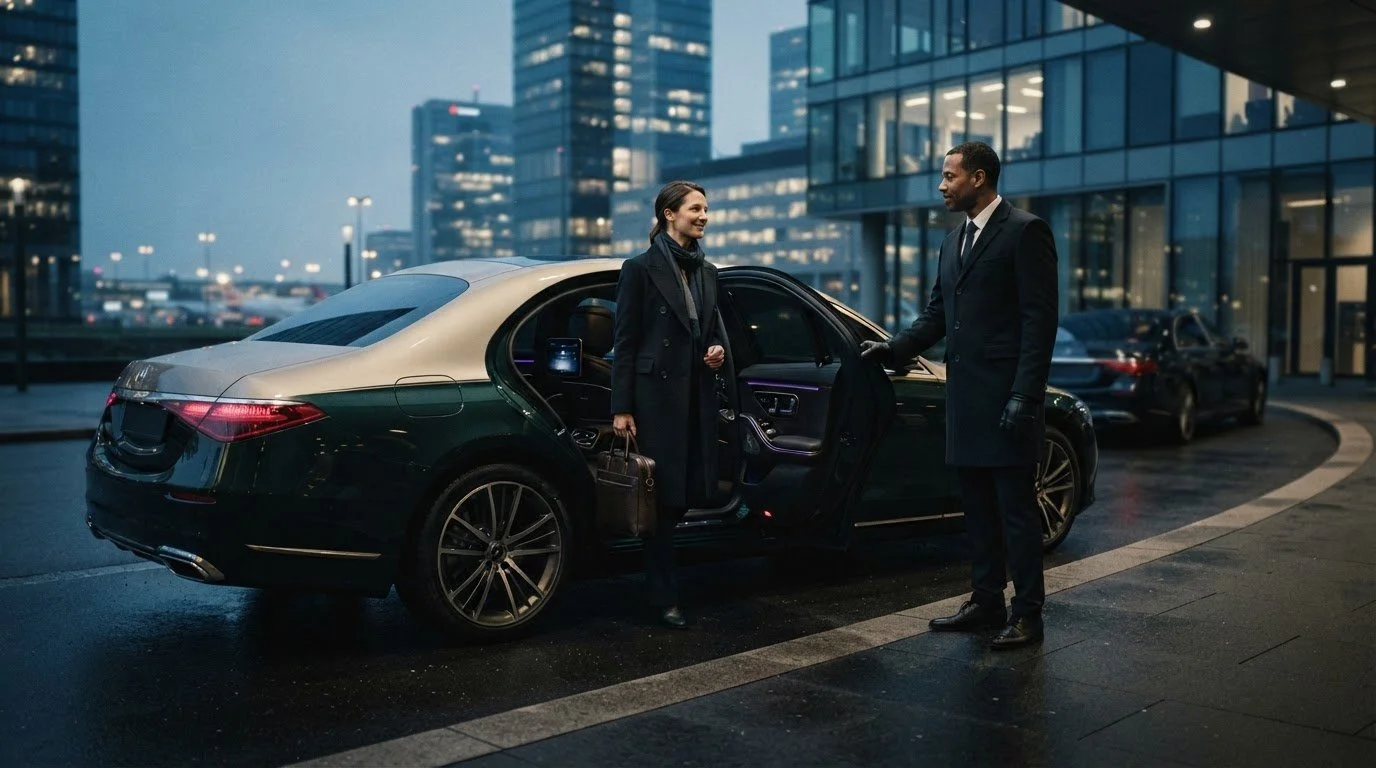
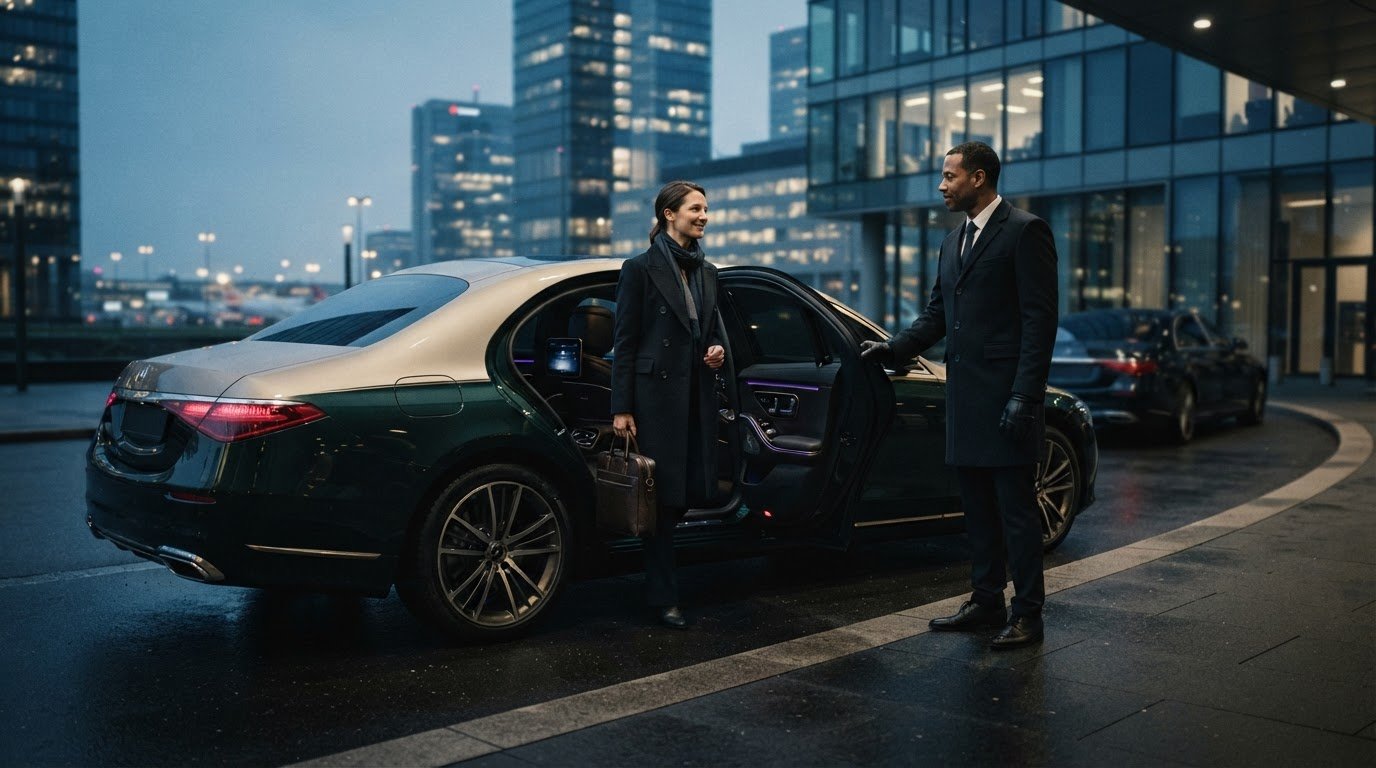
A polished vehicle can introduce a brand before a conversation begins, but the journey must live up to that impression. Transportation that reflects a company’s brand image brings its visual identity and customer experience into alignment, pairing considered vehicle design with dependable, well-managed service. When deliveries arrive late or products are damaged, that impression can quickly change.
It’s natural to focus first on logos, colors, and messaging. Yet customers and business partners also notice whether goods arrive in good condition, whether transit updates are clear, and whether delivery feels consistent with the brand’s standards.
This article explains how a consistent vehicle presentation and reliable transportation can support customer loyalty and help a company stand apart. You’ll learn how appearance and communication shape perception, which practices improve the travel experience, and where branded transportation can create value, along with risks to consider before making it part of your brand strategy.
Key Takeaways
- Match vehicle graphics, colors, and messaging to the audiences and settings where your brand needs to make a clear impression.
- Plan a branded transportation program around practical needs, including vehicle use, brand consistency, and a reliable customer experience.
- Protect your reputation by addressing delivery delays, product damage, and unclear transit communication before they undermine customer trust.
- Measure results against defined goals, using customer feedback, delivery performance, and business outcomes to guide refinements.
- Choose transportation services that support the experience you want customers and business partners to associate with your brand.
Brand-specific vehicle and service offerings
Branded transportation works as both a moving advertisement and a real service interaction. Unlike a billboard, a vehicle travels through different neighborhoods and can carry goods or passengers during the same trip. Its value depends on where it goes, what it communicates, and whether the journey reflects the brand’s standards. Planning transportation that reflects company brand image starts with those practical considerations.
For a delivery business, a logo on a truck connects the vehicle with the work it performs. A package company might pair its name with a clear box or location-pin icon, while a passenger service could use a car or wheel. The imagery should make the business easy to understand at a glance. When multiple providers support one customer journey, consistent brand elements can help create a more unified experience.
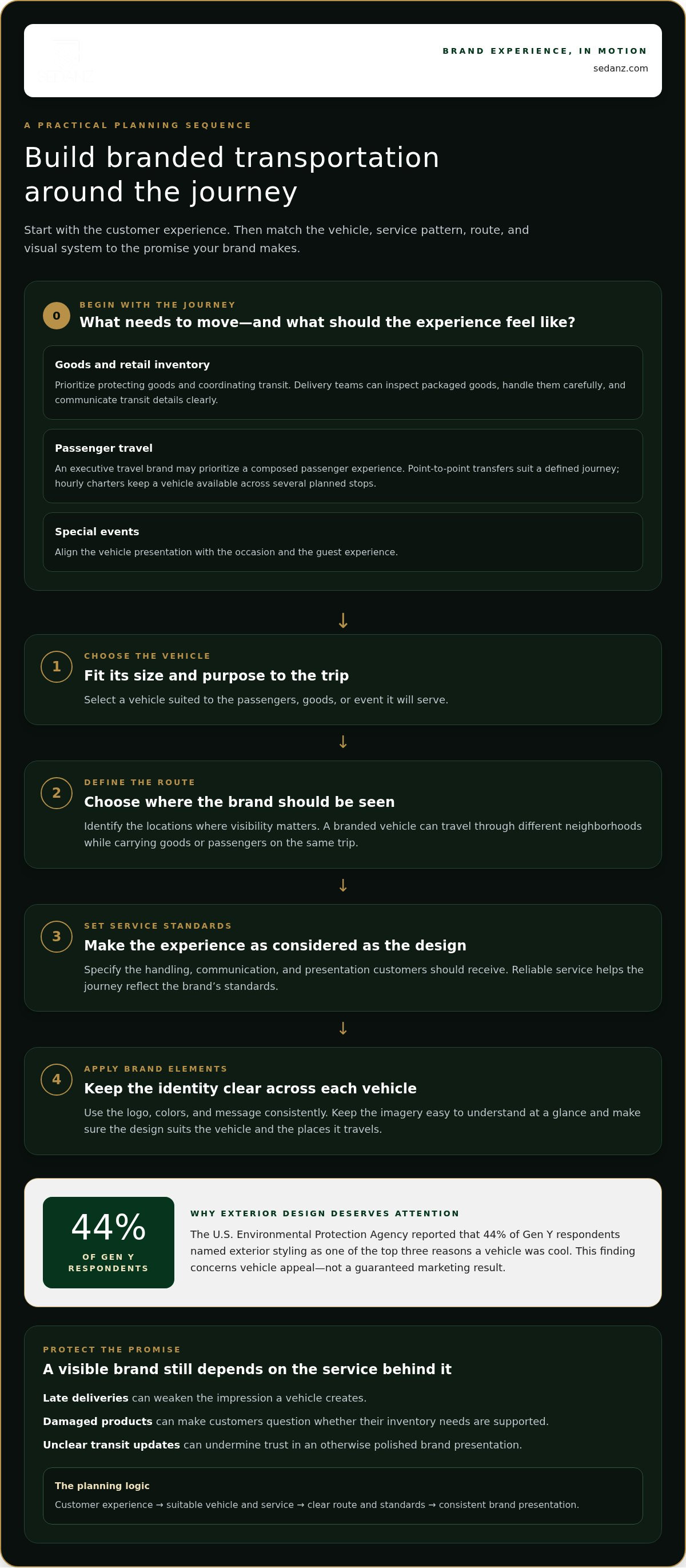
Match the vehicle and service to the journey before choosing graphics. A company moving retail inventory needs to protect goods and coordinate transit; an executive travel brand may prioritize a composed passenger experience. For passenger transportation that reflects company brand image, point-to-point transfers suit a defined journey, while hourly charters keep a vehicle available across several planned stops. Special event transportation can align the vehicle presentation with the occasion and guest experience.
- Choose the vehicle: Match its size and purpose to passengers, goods, or the event.
- Define the route: Identify the locations where the brand should be visible.
- Set service standards: Specify the handling, communication, and presentation customers should receive.
- Apply brand elements: Keep the logo, colors, and message clear across each vehicle.
Transportation and logistics services should reinforce the promise made by the design. A clean, legible vehicle can create recognition, but late deliveries, damaged products, or unclear transit communication can weaken trust. For example, a retailer receiving damaged stock may question whether the supplier can support its inventory plans. Delivery teams can reduce avoidable friction by inspecting packaged goods, handling them carefully, and communicating transit details clearly.
Professional designers can translate brand guidelines into vehicle-ready graphics. They can refine an icon, test how a logo reads on different vehicle shapes, and prepare an SVG graphic that resizes without losing quality. Direct imagery, such as wheels or aircraft, can signal transportation; abstract road strips or wings can suggest movement more subtly. For a global business, consistent design across vehicles and partner operations can help customers recognize the same identity in different settings.
Start with the customer experience, then select the vehicle, service pattern, and visual system that support it. That sequence keeps branded transportation useful, recognizable, and aligned with the company’s actual promise.
How do vehicle color, design, and messaging affect brand perception?
A vehicle’s color, graphics, and wording create a visible first impression. A consistent palette can make a fleet recognizable, while mismatched colors may make the brand feel fragmented. For example, a company using deep blue across its website and uniforms can carry that color onto its vehicles. The design should remain legible against the vehicle body and suit the settings where it travels.
Exterior styling influences how people assess a vehicle and the brand it represents. Among Gen Y respondents, 44% named exterior styling as one of the top three reasons a vehicle was cool, according to the U.S. Environmental Protection Agency. That finding concerns vehicle appeal, not a guaranteed marketing result. It does show why careful design deserves attention alongside the logo.
Build the visual system around one clear message. A delivery vehicle might lead with the company name and a simple package icon; a passenger service might emphasize composed, precise travel. Keep essential text readable from a distance, and avoid placing key details across doors, windows, or seams. A strong design gives each element room, so the brand stays legible in motion and at the curb.
Color can distinguish a company, but its meaning depends on context. A bright accent may attract attention on a dark vehicle, while a restrained palette can suit a professional service. Test the design on the actual vehicle shape. Curves, handles, and windows change how graphics appear, and a layout that works on a screen may not read clearly on a long van.
- Start with recognition: Use the same core colors, logo, and type style across vehicles and customer materials.
- Prioritize clarity: Keep the company name and central message prominent, with secondary details quieter.
- Check the full vehicle: Review each side, the rear, and the vehicle’s appearance in different light.
- Align partner branding: Set rules for displaying partner names, colors, and logos.
Regional airlines may display major partners’ names, color schemes, and logos on aircraft, according to the U.S. Government Publishing Office. The example illustrates how shared branding can preserve recognition across a partnership. For any business, agree on logo placement and visual priority before applying graphics. A considered approach to brand-aligned transportation planning helps connect appearance with the experience people receive.
Ultimately, color and messaging shape expectations; the service must support them. A composed design paired with clear communication presents a more coherent identity than decorative graphics alone. Review the vehicle as a customer would see it: approaching, waiting, and departing. Each view should tell the same brand story.
A transport icon should fit the business and signal its purpose quickly. Abstract road strips, wings, or other movement-inspired imagery can suggest a brand subtly; icons may also convey ideas such as reliability, speed, trust, or a global outlook.
How can a company plan and launch a branded transportation program?
Start with the business purpose, not the vehicle graphics. A retailer may need dependable product movement, while a conference organizer may need coordinated guest arrivals. Write down the audience, the journey, and the brand promise each trip should express. This gives the program a practical foundation before design or booking decisions begin.
Next, map the transportation tasks. Record origin and destination patterns, passenger or cargo needs, timing constraints, and customer touchpoints. For example, a company planning an executive meeting can list airport arrivals, hotel transfers, and venue departures. A product business can map collection, transit, delivery, and customer updates. These details help determine which vehicle types and service patterns fit.
Set service standards that teams can follow. Define how staff greet passengers, handle delays, communicate changes, and present vehicles. For a product delivery, specify how packaged goods are inspected and handled. For an event, set an arrival sequence and a clear point of contact. A written standard prevents the visual brand from promising an experience the operation cannot consistently support.
- Assign ownership: Name a program lead and identify who approves branding, schedules trips, and handles customer communication.
- Set selection criteria: Compare vehicle suitability, route needs, service style, and operational coordination against the planned journeys.
- Prepare brand guidance: Document logo use, colors, message hierarchy, and partner-brand placement.
- Run a focused pilot: Test the plan on a defined route or event before expanding its use.
- Review and refine: Gather feedback from passengers, staff, and business partners, then adjust procedures.
A pilot reveals practical details that a design mock-up cannot. A venue entrance may require a different arrival sequence than expected; a passenger transfer may need clearer pickup instructions. Record where questions arise, which handoffs feel unclear, and whether the vehicle presentation matches the intended tone. Use those observations to refine the program before applying it across more journeys.
Keep the brand experience consistent across internal teams and external partners. Share approved wording, pickup procedures, and escalation steps with everyone involved. If a partner handles part of a journey, clarify who communicates with the passenger and who manages changes. For global programs, document core brand rules while allowing operational details to suit each destination.
Finally, review the program after launch using customer comments, trip records, and team feedback. A point-to-point transfer or special event transportation plan should serve its stated purpose, not simply display a logo. A measured launch makes it easier to preserve brand consistency while improving the service around real customer needs.
What are the risks and drawbacks of using branded vehicles for marketing
A branded vehicle makes the company visible, but it also makes service failures visible. A late delivery, damaged package, or unanswered transit question can quickly become a public complaint. Customers may then question whether the brand can meet their needs. The vehicle’s logo links that disappointing experience directly to the company, not just to the delivery itself.
Transportation problems can also strain business relationships. A retailer facing missed executive arrivals or disrupted guest transfers may need to adjust its plans and could lose confidence in the arrangements. Repeated issues can prompt business partners to seek alternatives or deprioritize the brand. Vehicle graphics cannot offset unreliable service. The operating standard behind the branding must support the promise customers see.
Public feedback can extend the impact beyond one customer. A poor delivery experience may lead to negative reviews, social media backlash, or complaints that deter prospective buyers. Customers frustrated by delays or damage may also be less likely to reorder. A branded vehicle can therefore amplify both a smooth experience and a visible service shortfall.
- Unclear transit communication: Customers who don’t know where a shipment stands may lose confidence in the brand.
- Product damage: Weak packaging or careless handling can trigger returns and additional operating work.
- Inconsistent partner execution: A partner’s service can affect how customers perceive the shared brand experience.
- Visual clutter: Too many messages can make a vehicle harder to read and weaken brand recognition.
Reduce operational risk before expanding vehicle branding. Inspect packaged goods for weak points, secure pallet loads, and train staff in careful handling. Durable packaging can protect goods from moisture and rough handling; stretch film can limit pallet movement during transit. Businesses can also use automated wrapping systems for consistent loads. These steps address damage risks before a branded vehicle carries the shipment into public view.
Set clear standards for each delivery stage. A company can define who updates customers, how staff respond to a damaged item, and how partners report delays. Review complaints and returns for recurring patterns, then adjust packaging, training, or communication. For passenger journeys, a point-to-point transfer should likewise have clear pickup instructions and communication responsibilities. Branded transportation is most credible when the experience consistently supports the image displayed on the vehicle.
The design itself can create a further risk if its imagery does not fit the service or competes with essential information. Transport logos may use direct vehicle imagery, including cars, bikes, wheels, ships, and airplanes, to connect the logo with the business it represents. That connection may be less clear when a business uses several kinds of transportation or when the graphic suggests a service customers do not receive. A moving vehicle also gives viewers little time to interpret a crowded design, so the logo and key message need to remain easy to distinguish.
Before committing to a fleet-wide look, check that the branding is legible on the vehicles used and consistent with the service being delivered. Consider how graphics appear alongside other markings and whether changes to vehicles or partners could make the design confusing. Keep the central brand cue prominent, and remove decorative elements that do not help customers identify the business. Attention to fit and clarity can limit avoidable confusion, while careful operations remain essential to protecting the reputation the vehicle carries.
How can companies measure the ROI of branded transportation?
Begin by defining what the branded transportation program should achieve. A retailer may want stronger repeat purchasing, while an event organizer may prioritize guest satisfaction. Choose outcomes before launch, then record existing performance as a baseline. Without that starting point, later changes cannot be meaningfully compared with earlier results.
Separate the program’s costs from its intended returns. Costs can include vehicle graphics, design work, upkeep, and operational changes. Returns may include improved brand recognition, customer retention, fewer damaged goods, or stronger retailer relationships. Use the same accounting period and include relevant operating expenses, not just the initial design. This creates a more complete view of the investment.
A simple ROI calculation compares gains with costs: subtract program costs from attributable returns, then divide by those costs. The formula is useful only when the underlying figures are credible. For example, if travel procedures change alongside the vehicle branding, separate their effects where possible. Otherwise, the reported return may reflect several operational changes rather than branding alone.
- Brand recognition: Ask customers how they discovered the company and whether they recall its vehicles.
- Customer behavior: Track repeat purchases, reorders, and customer retention against the chosen baseline.
- Delivery quality: Review late deliveries, product damage, returns, and transit complaints.
- Partner outcomes: Monitor retailer feedback, inventory disruptions, and recurring supplier concerns.
- Program costs: Record design, application, maintenance, and related operating expenses.
Use route records to understand where branded vehicles travel and which audiences they serve. Compare feedback from customers who encounter the vehicles with feedback from other customer groups. Treat this as a directional comparison, not proof of exposure or causation. A route log identifies movement; it cannot establish how many people noticed the vehicle or acted because of it.
Review performance consistently, using the same definitions for each measure. If “repeat booking” means a second completed reservation, keep that definition throughout the analysis. Segment results by route, audience, or service type when records support those distinctions. A point-to-point transfer may have different customer goals from special event transportation, so measure each against its own purpose.
Finally, combine numerical records with direct feedback. A short customer survey can reveal whether the vehicle looked professional and whether the journey matched the brand promise. Compare those responses with delivery and retention trends before adjusting the program. To plan a journey around your company’s presentation standards, discuss branded transportation needs.
Sedanz: Airport Transfers
Sedanz provides Airport Transfers for business travelers whose journey should reflect company standards from arrival onward. For a scheduled meeting across town, Point-to-Point Transfers connect the required locations, while Hourly Charters suit itineraries with several planned stops. Luxury Sedan Service offers a polished option for individual executive travel. Matching the service to the itinerary helps keep the travel experience aligned with the impression a business wants to make.
For companies coordinating travel around a conference or client visit, a planned transfer can bring greater consistency to the guest journey. Consider the pickup point, destination, and schedule when choosing the right arrangement. To discuss transportation for your business travel, contact Sedanz.
Make Every Journey Part of the Brand Experience
The next step is to connect your company’s travel needs with the impression you want to leave. Transportation that reflects your company’s brand image should feel intentional at every touchpoint, from booking to arrival. Start with a typical journey and define what customers or colleagues should experience along the way. That simple exercise can turn brand standards into practical travel choices.
Sedanz offers Airport Transfers, Hourly Charters, and Point-to-Point Transfers for business travel with different schedules and routes. An airport pickup, a day with several planned stops, or a direct trip between meetings each calls for a distinct arrangement. Selecting the right fit helps make the journey feel considered without adding complexity to your team’s planning.
Bring your upcoming travel plans and desired experience into the conversation. Contact Sedanz about your transportation needs, and take a thoughtful next step toward a more consistent experience for your guests and colleagues.
Frequently Asked Questions
What transportation options best reflect a company’s brand image?
The strongest option is the one that fits the audience, journey, and service promise. A consulting firm welcoming visiting executives might choose chauffeured sedans, while an event organizer could arrange coordinated vehicles for guests. A retailer transporting its own products may use branded delivery trucks. Consider whether customers will ride in the vehicle, see it on the road, or meet it at a pickup, then choose a format that supports that experience.
How do companies choose branded vehicles that match their brand identity?
Start with the people and purpose the vehicle must serve, then compare suitable vehicle types against the brand’s character. A discreet professional identity may call for restrained graphics and an executive vehicle; a family-focused business may favor clear, approachable messaging. Review the design on the actual vehicle, including doors, windows, and rear panels. Finally, confirm that the vehicle’s role and customer experience reinforce the same impression as the visual treatment.
What are examples of companies using branded transportation effectively?
Useful examples span different industries. A regional bakery could use delivery vehicles with a recognizable logo and clear packaging, helping retailers identify incoming stock. A hotel might coordinate guest transfers in vehicles that echo its visual identity, extending the welcome beyond the lobby. An event production company could use branded vans for equipment transport, making crew arrivals easier to identify while keeping the public-facing presentation consistent.